
Functional Accessory Kits for Robot Vacuums: Can Different Compatible Parts Improve Cleaning Performance?

At the beginning of this article, there is one question worth asking:
Do replacement parts always have to be replaced with exactly the same type of part?
The traditional logic of replacement parts is simple:
The original main brush wears out → replace it with the same main brush.
The mop pad becomes worn → replace it with the same mop pad.
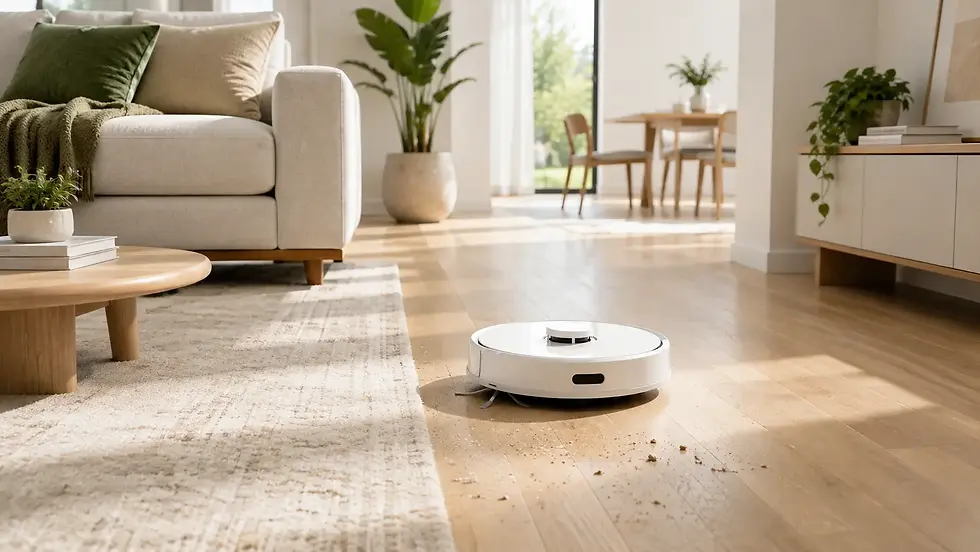
But as competition across the cleaning industry continues and robot vacuums become more mature, many popular brands are developing new anti-tangle systems, automated cleaning technologies, and other new solutions.
As a result, we are now seeing more machines with:
Anti-tangle main brushes
Bristle brushes
Rubber brushes
Mop pads with different thicknesses and materials
Different side-brush designs
As robot vacuums continue to develop, manufacturers are also paying more attention to different cleaning scenarios.
In addition to changes in the machines themselves, brands such as Dreame and Xiaomi have also expanded the variety of accessories available for their existing machines, including replaceable functional accessories designed for different cleaning needs.
This leads to another question:
If accessories with different structures can be safely installed on the same machine, could they perform differently in different cleaning scenarios?
One point should be made clear first. This article is not encouraging users to randomly mix accessories. We are discussing functional robot vacuum accessory kits that have already been checked for compatibility and safety.
Why Are Functional Robot Vacuum Accessory Kits Worth Discussing?
Whether for ordinary consumers looking for accessories that better suit their daily cleaning needs, or for B2B buyers considering different purchasing options, functional accessory kits could become another direction for accessory combinations now and in the future.
In fact, some accessory sellers are already experimenting with similar combinations.
On top of the classic kits containing main brushes, side brushes, filters, mop pads, and dust bags, some are adding TriCut roller brush, mop pads with different textures, or separate dry and wet mop pads.
Dreame provides a few useful examples:
For some of the same machine platforms, users can choose between a standard main brush and the anti-tangle TriCut Brush.
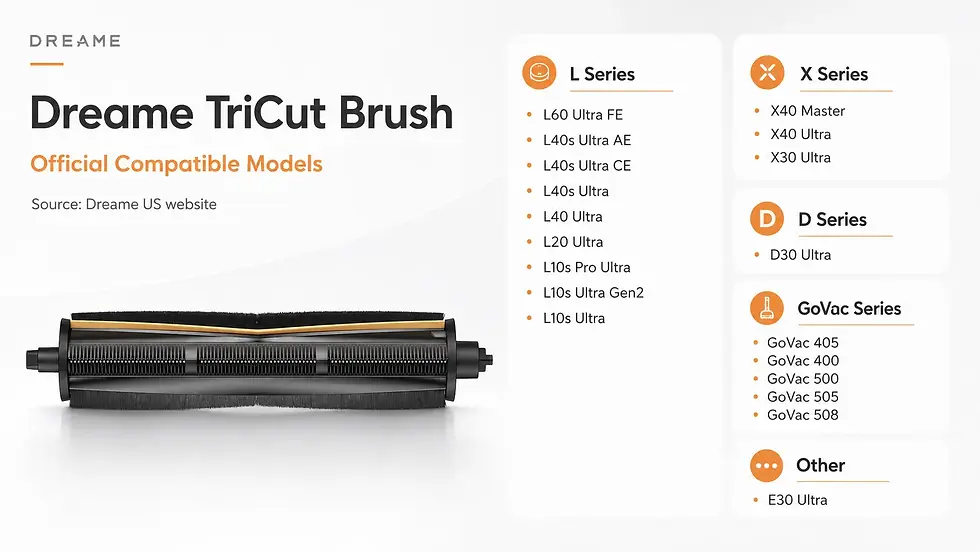
This shows that:
A main brush is no longer only a spare part. It can also become a functional upgrade.
One machine can even prepare different mop pads for different rooms.
This suggests that: Different cleaning tasks may require different contact materials.
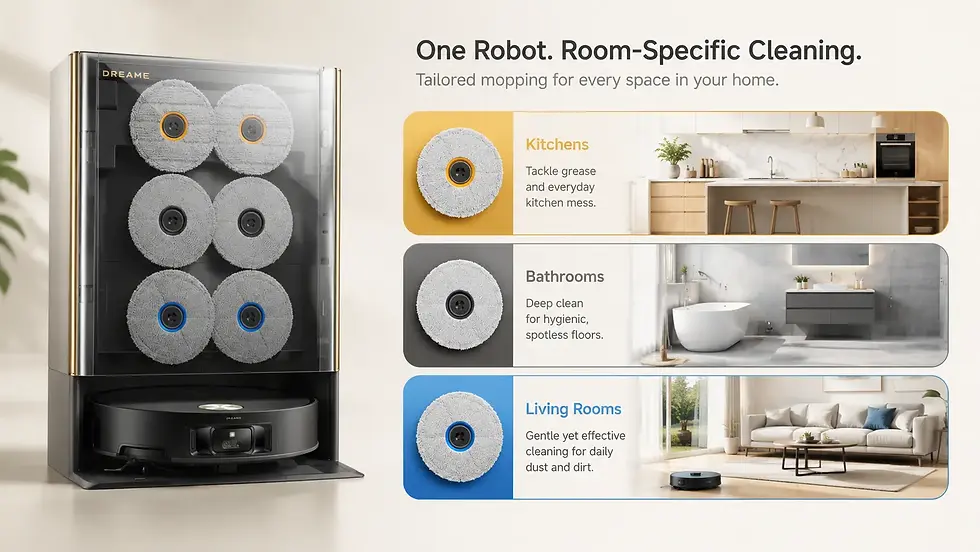
That naturally raises another question:
If flagship machines are already beginning to select different accessories automatically, could conventional machines achieve some of the same effect by manually switching between compatible accessories?
We have previously written about whether TriCut roller brush can be used on conventional robot vacuums, and we have also covered the topic in a related video.
What Can Make the Same Type of Accessory Perform Differently?
The cleaning performance of accessories is closely related to the design details of parts such as the main brush, side brush, and mop pad.
For the main brush, differences between rubber and bristle materials, standard rollers and special anti-tangle structures, bristle density, bristle length, roller diameter, and hair-release design can all affect pet-hair handling, carpet agitation, fine-dust pickup, and hair tangling.
For the side brush, three-arm or five-arm structures, bristle length, softness, arm angle, and anti-tangle design may change edge-cleaning performance, debris scattering, and the risk of hair wrapping.
For mop pads, microfiber density, thickness, texture, absorbency, and the design of the scrubbing surface can affect daily dust removal, dried-stain cleaning, water absorption, and floor contact.
These are only some of the factors involved, and in real cleaning situations, many of them can affect one another.
How Could Different Compatible Accessories Be Tested?
Based on these kinds of differences, it may be worth testing whether specially designed compatible accessories can be used on machines that originally come with more conventional accessories, especially when different cleaning environments are considered.
For example, on the same compatible robot platform, a standard main brush could be compared with a hair-cutting or anti-tangle brush using long hair and pet hair to observe pickup performance and hair wrapping.
Different side-brush designs could be tested with rice, cereal, or cat litter along walls and corners to compare edge pickup and debris scattering.
Mop pads can also be tested more specifically.

A standard microfiber pad and a textured or scrubbing pad could be used on dried coffee, sauce, or light kitchen stains to compare how many cleaning passes are needed.
Other functional accessories, such as standard and activated-carbon HEPA filters or dust bags, could also be compared to see whether they create noticeable differences in airflow, odor control, or everyday use.
The purpose is not to assume that the alternative accessory is better, but to find out whether a different compatible design creates a useful advantage in a specific cleaning situation.
In fact, many ordinary users are already experimenting with different accessories in their own daily cleaning routines.
There are also videos comparing the cleaning performance of different brush designs on the same or similar machines.
Can Functional Accessories Become Complete Accessory Kits?
However, whether complete functional accessory kits can attract enough user demand, how these kits should be combined, and which models should be prioritized for compatibility testing are all questions that manufacturers and distributors still need to consider.
After all, buying only one compatible accessory is not always the most economical option for either sellers or end users.
This is also one reason why there are already so many different accessory-kit combinations on the market.
What Should Manufacturers and Wholesalers Consider?
For manufacturers and wholesalers, the first question when developing a replacement part has traditionally been: Is it compatible?
In the future, there may be several additional questions:
Does it address a weakness of the original accessory?
Is it more suitable for pet households?
Is it more suitable for carpets?
Does it reduce hair tangling?
Does it improve scrubbing performance?
Can it be combined with other functional accessories as a kit?
In other words, third-party accessories do not always have to be exact copies.
But one condition remains:
Compatibility and safety must be properly tested.
More Flexible Accessories Could Give One Machine More Uses
Combining regular consumable parts with functional accessories certainly brings additional risks.
However, brands such as Dreame are already showing some signals in this direction. When developing new machines, they are expanding compatibility across brushes and mop pads, while accessories such as TriCut roller brush are being designed to work with a wider range of popular models.
This gives users more freedom to make one machine handle more cleaning needs.
At the same time, new robot vacuums are also moving toward greater multifunctionality.
Brands are trying to make one machine capable of handling more floor types, more kinds of dirt, and more household situations. Developing functional accessories with broader compatibility can add another layer of flexibility to the machine itself.
As a compatible-parts supplier with years of experience in robot vacuums, vacuum cleaners, and wet-dry floor cleaners, techTongBo also hopes to see more purchasing needs from both B2B and consumer markets, helping us further improve the flexibility and variety of our accessory-kit combinations.
techTongBo (also named: Nanjing TongBo / NJTB) is a Chinese company specializing in the manufacture and sales of vacuum cleaner accessories. We offer replacement accessories for the global market that are compatible with mainstream vacuum cleaner brands and have stronger price advantages.


Comments